

Why do actors always need 'motivation'?
The normal person response to "what's my motivation?"


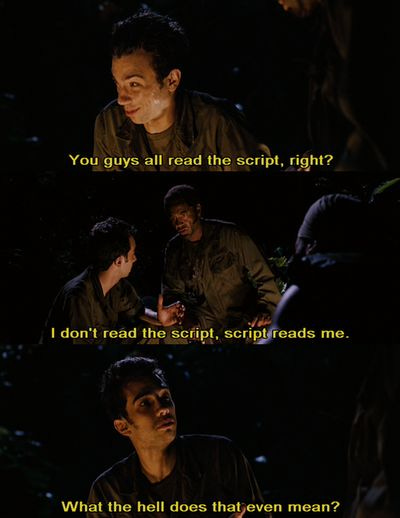
There’s this moment in Tropic Thunder (2008) where Kirk Lazarus, played by Robert Downey Jr, is so deep in character that he refuses to break until the DVD commentary. The whole film is basically Ben Stiller roasting every actor who’s ever held up production to ask their director, “But what’s my motivation here?”
Hollywood loves this joke. Actors are needy. Actors overthink everything. Why can’t they just say the line and hit their mark?
Silly actors. So self-aggrandising. So obsessed with their own inner worlds.
When I first started journaling my days like a screenplay, I’d write scenes exactly as they happened. “INT. KITCHEN - MORNING. I make coffee. I check my phone. I leave for work.” Done. Easy. Why complicate it?
But here’s what I realised after about three weeks of writing the most boring screenplay ever committed to paper: I had no idea why my character (me) was doing anything.
I was just moving through scenes because that’s what the day required.
Wake up. Coffee. Make sure everyone in the house is fed. Walk the dog. Eat lunch because it’s 12:30. Scroll Instagram because I’m alone with my thoughts for too long.
My character had zero motivation. I was just hitting marks.
Now a quiet day doing chores is fine. Not every day is going to be ‘blockbuster’.
But I didn’t know why or what I was doing it all for.
And that can cause problems like dissatisfaction, resentment toward your own routine, waking up one day and wondering where the last five years went.

Researchers at Duke University published a study in 2006 that found about 45% of our daily actions are habits, not decisions.
You’re running on autopilot nearly half the time. Which makes sense from a survival perspective. Your brain doesn't want to waste energy deciding whether to brush your teeth or which shoe goes on first.
It automates the boring stuff so you can focus on, I don't know, not getting hit by a bus.
When you’re not paying attention, autopilot starts taking over scenes that actually matter.
You autopilot through coffee with a friend.
You autopilot through sex.
You autopilot through an argument with your partner, saying the same lines you always say because that’s just what this scene requires, right?
I started noticing this in my screenplay journal, The Plotline©.
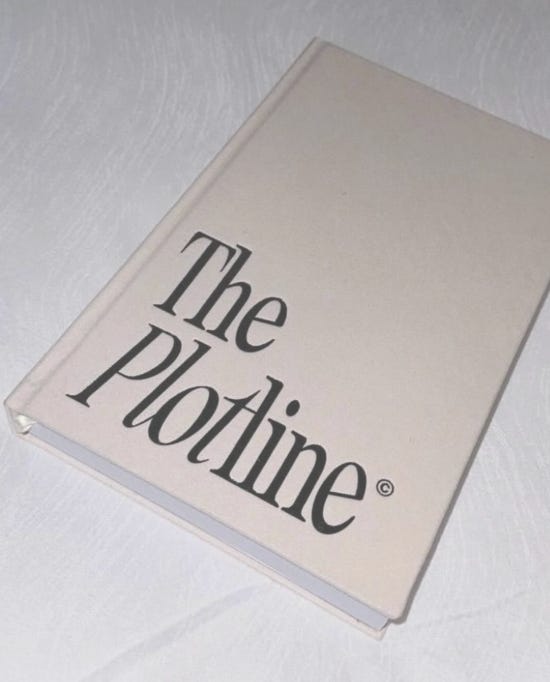
Whole days would go by where my character wanted nothing. Did nothing on purpose. Just reacted to whatever the scene threw at me.
If this were an actual movie, I’d walk out of the cinema. Who wants to watch a protagonist with no agency?


So I started stealing a trick from actors.
Before starting my day, I’d ask: what does my character actually want here?
Not what happened. What I wanted.
And I don’t mean the obvious surface stuff. I mean the real thing underneath.
After Christmas this year I spent a day pulling everything out of every crammed cupboard and cleaning out every crevice.
Surface level? I was organising. But when I actually asked myself what I wanted in that scene, the answer was control.
I’d just gotten a rejection email for a pitch I spent weeks on. I couldn’t control that editor’s decision, but I could control whether my books were alphabetised or colour-coded.
Suddenly that scene meant something. It wasn’t filler. It was my character trying to feel capable after being told no.
Or take something smaller. I reread a text from my friend three times before responding.
What did I want? I wanted to say the right thing. I wanted her to think I’m funny. I wanted to maintain this image I have of myself as someone who’s good at friendships even though I’ve been kind of MIA lately.
That’s subtext. That’s motivation.
Actors learn this on day one.
Every line, every gesture, every entrance has to have a want behind it.
Even if your character is just walking into a room, you need to know:
Do they want to be noticed?
Do they want to slip in unnoticed?
Are they looking for someone?
Avoiding someone?

Because who doesn’t love exercise? Ha ha.
Here’s what I want you to try.
Pick one moment from today. Something small and forgettable. Making breakfast. Sending that email. Procrastinating sending that email.
Write it out like a scene. Just a few lines. What happened, bare bones.
Now ask yourself: what did I actually want in that moment?
Not what you were doing. What you wanted. And be honest. Don’t give me the noble answer BS. Give me the real one.
(This can be confronting if you really get honest with yourself).
Maybe you wanted your coffee to taste like the trip to Italy you can't afford yet.
Maybe you wanted that email to prove you're competent because you've been feeling like a fraud all week.
Maybe you wanted your outfit to say "I have my life together" even though your brain feels like scrambled eggs (I know this one well).

Write that down. That’s your motivation.
Now here’s the thing. Once you know what you wanted, you can ask better questions. Did you get it? If not, why? What got in the way? What does your character need to do differently tomorrow?
You’ve just turned a forgettable moment into a scene that matters.
That’s what motivation does.
It makes you the active character in your own story.
I’m not saying you need to be Kirk Lazarus levels of method about your morning routine.
You don’t need to refuse to break character until the DVD commentary of your life comes out (spoiler: it won’t).
But I do think those actors Hollywood loves to make fun of are onto something.
Asking “what’s my motivation?” is the difference between sleepwalking through your Tuesday and actually knowing why you’re here.
I feel like the annoying actor holding up production to understand their character’s motivation? That should be all of us. Every single day.
If it helps us all live better lives then that’s ok.
So go ahead. Hold up production. Ask the question. Figure out what you want.
Your movie will be better for it.
xox
Meg

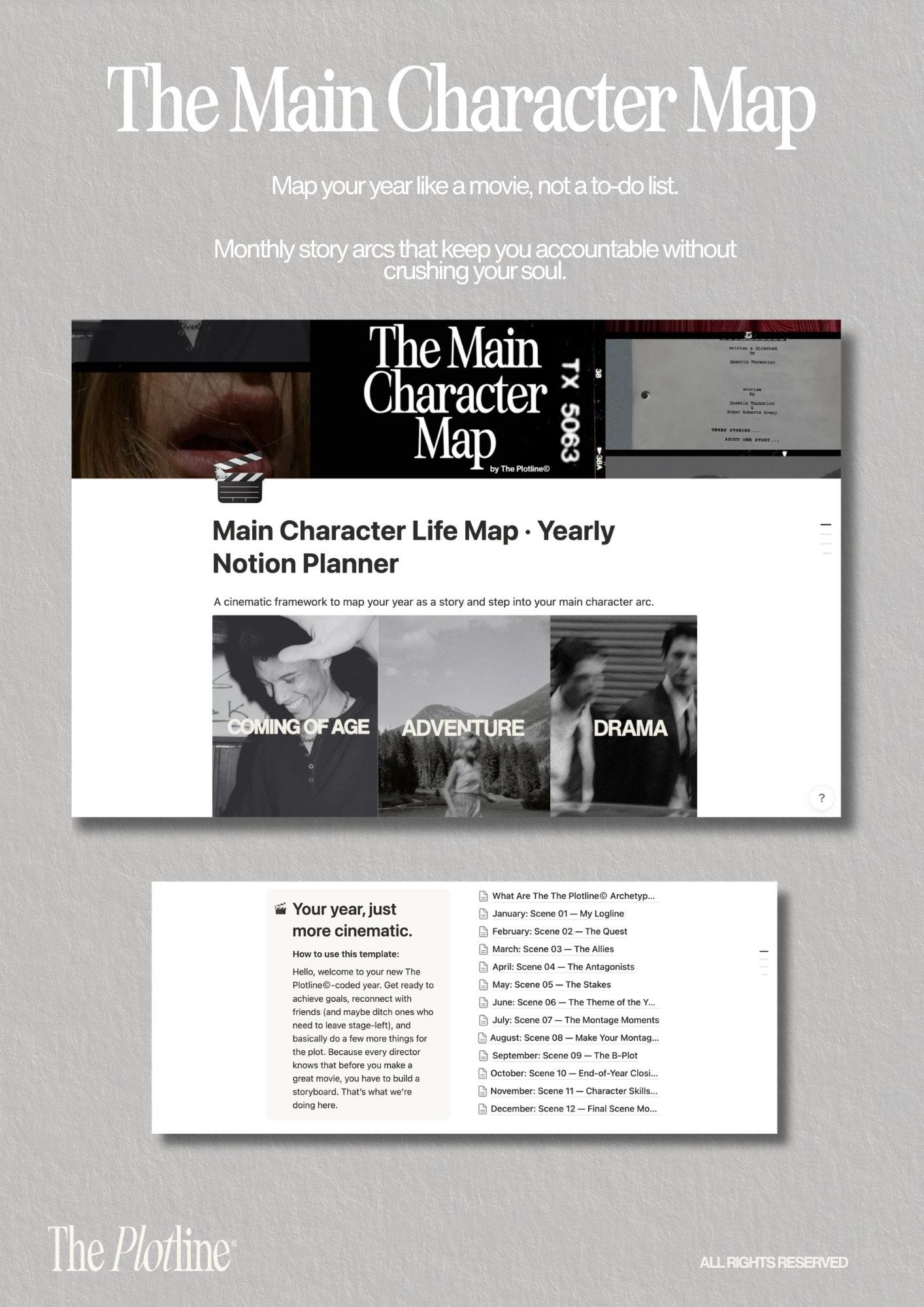
Why join The Plotline© as paid subscriber? ✨ Here’s what’s included:
✨Access to premium Plotline tools you’d normally buy in-store
Instant downloads of journals, guides, prompts, and expansion packs that usually live at doitfortheplotline.com for $11–$39.
✨Quarterly surprise gifts designed to level up your character arc
Digital bonuses, new frameworks, mini-courses, archetype deep-dives and more, delivered every season.
✨Exclusive guided journaling not released anywhere else
Deeper work, advanced exercises, story reframes, and personal development prompts built only for the inner circle.
✨Private essays + Founder Notes
More honest, more intimate reflections on identity, creativity, relationships, archetypes, and the psychology behind the Plotline method, to help you live a more cinematic life.
✨First access (and discounts) to new launches
Subscribers get early access to physical products, new templates, workshops, retreats, and seasonal Plotline expansions.
About Meghan at The Plotline©
Hey, I’m Meghan, the mind behind The Plotline©. I’m an Australian writer, founder, and mother, who has spent the last few years turning every plot twist in my life into something worth learning from. I built The Plotline© because I needed a way to feel like the main character in my own story again, and it turns out thousands of you did too.
By day, I juggle copywriting for brands I love, improving the The Plotline© app, running a little journal company, and raising my son. By night, I write here about the parts of life that usually stay under the rug: the rewrites, the self-resurrections, the tiny joys that save us, the things we get wrong, and how to start again without starting over.
This space is where I pour everything I know about storytelling, self-worth, psychology, and becoming the version of yourself you secretly hope is possible. If you’re here, you’re probably in your own plot twist. Good. That means the story’s getting interesting.

Source: Neal, D. T., Wood, W., & Quinn, J. M. (2006). Habits—A Repeat Performance. Current Directions in Psychological Science, 15(4), 198-202.